
UAE Owner’s Guide
Ceramic Coating vs PPF: Which One Actually Protects Your Investment?
Between 45°C summers, fine desert dust, sudden rain, and Sheikh Zayed Road gravel, a UAE car takes more abuse in two years than a European car sees in five. Choosing between ceramic and film is not about which sounds fancier, it is about which one survives the road you actually drive on.
Why it matters
Wax, sealant, ceramic, film: they are not the same product
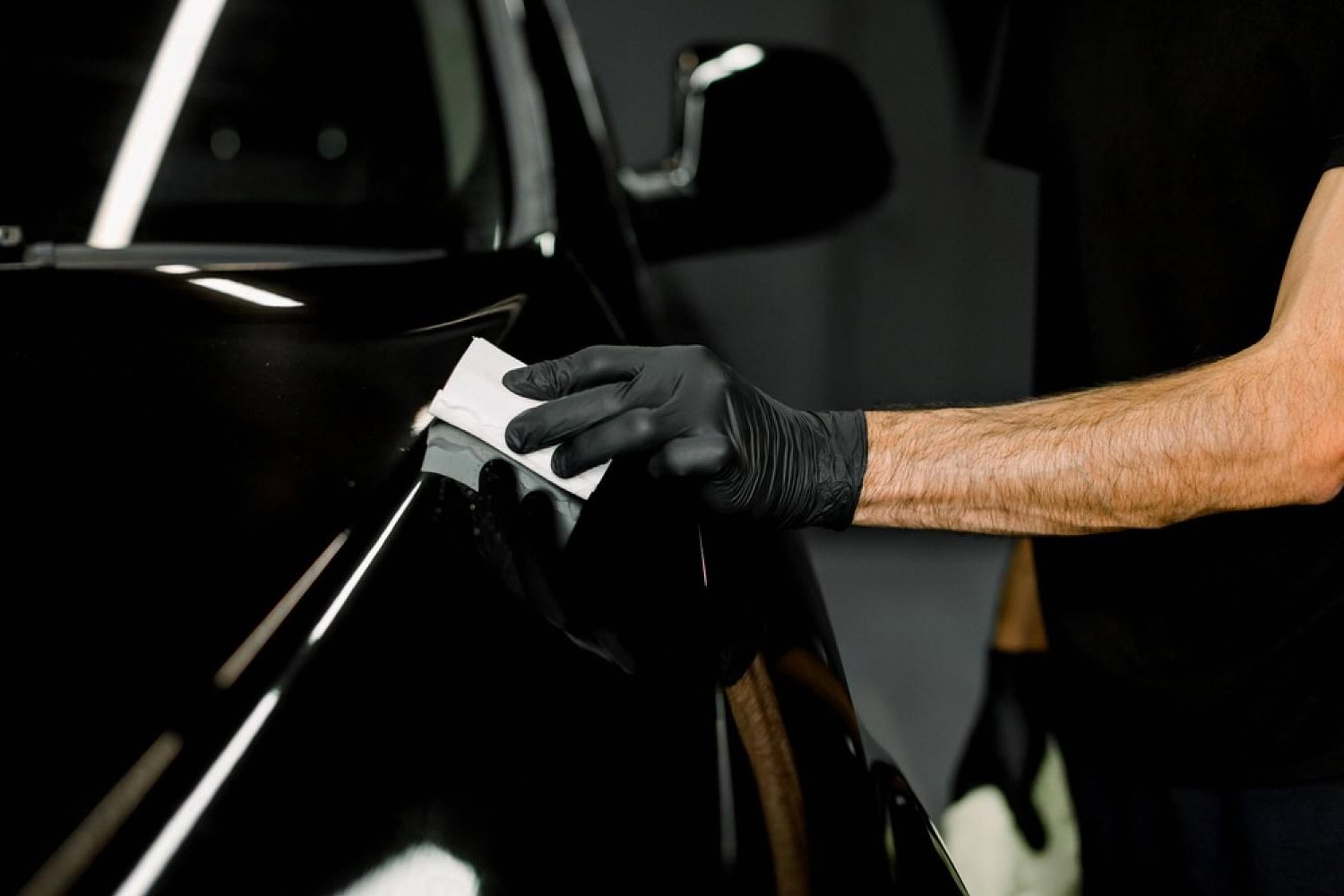
The words get used interchangeably at car washes across Dubai and Abu Dhabi, and that costs owners real money. Carnauba wax is a soft natural layer that lasts weeks, not months. A synthetic sealant pushes that to roughly four to six months. A proper ceramic coating is a semi-permanent silicon dioxide layer that bonds to clear coat and holds up for two to five years. Paint protection film is a physical urethane sheet you can actually feel with your fingernail, engineered to absorb impact.
Then there are hybrid systems, usually film on the high-impact panels plus a ceramic layer on top of everything, including the film itself. That combination is where most serious UAE owners end up once they understand the trade-offs.
What each layer actually defends against
Ceramic coating
Beats UV fade, bird droppings, mild acid rain, sand etching, and swirl marks from hand washes. It will not stop a rock chip from a truck on E11.
Paint protection film
Absorbs rock chips, deep scratches, gravel spray, and cart hits in mall parking. Modern PPF is self-healing: light scratches vanish under sun or warm water.
Where they overlap
Both add hydrophobic behaviour and both make washing easier. Neither replaces sensible driving, and neither survives a proper collision.
When you should consider each option
Match the protection to the threat
- Daily commuter, mid-range car: a two-to-three year ceramic paint protection layer usually gives the best cost-to-benefit ratio.
- New luxury or sports car: full-body PPF is the honest answer, because a single chip on a matte or exotic paint can cost thousands to repaint.
- Weekend car, garage-kept: a partial PPF kit on the hood, mirrors, and front bumper, plus ceramic on the rest.
- Fleet or ride-hail vehicle: ceramic only, prioritising wash speed and UV resistance over impact defence.
The application process, step by step
- Inspection and paint reading. A detailer measures paint thickness with a gauge, notes existing swirl marks, and photographs every panel. Skip this and any warranty claim later is worthless.
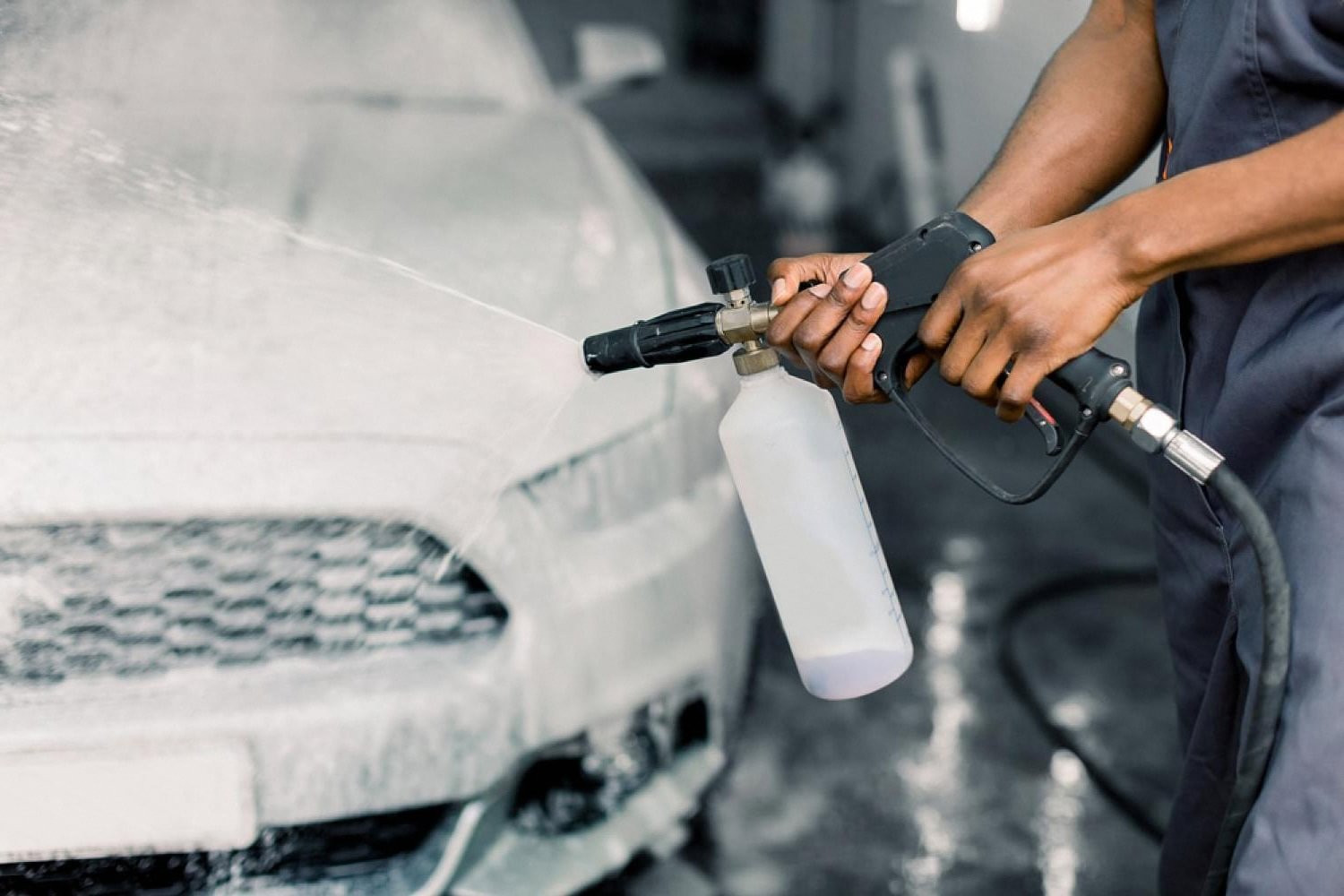
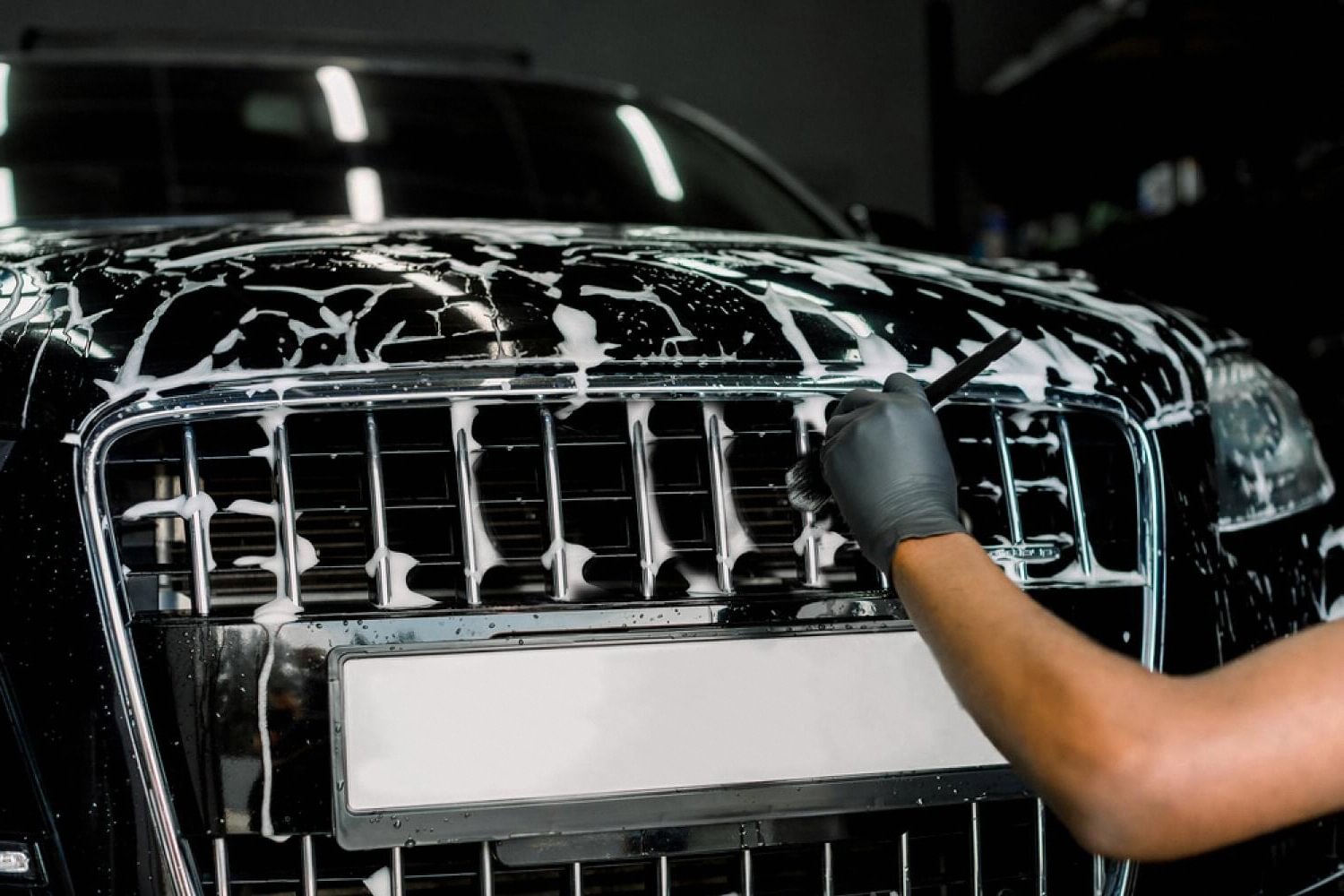
- Decontamination wash. A pH-neutral foam bath, followed by iron remover and clay bar work to pull embedded brake dust and tar out of the clear coat.
- Paint correction. Machine polishing removes swirl marks and light scratches. This is the stage most budget shops shortcut, and it is the one that decides how the final finish looks.
- Surface prep. An IPA or dedicated panel wipe strips oils so the coating or film adhesive bonds directly to bare clear coat.
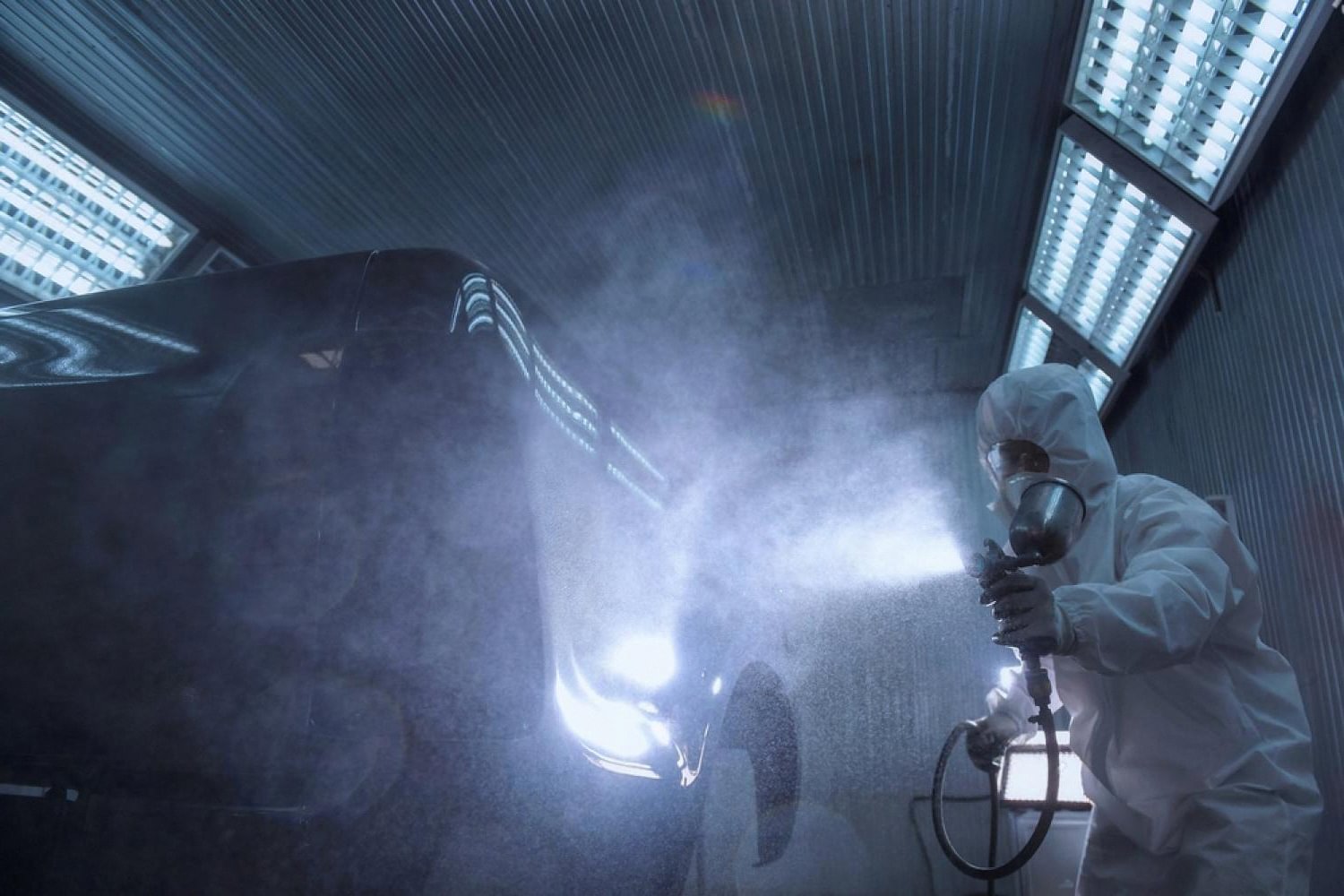
- Application. Ceramic is wiped on panel by panel and levelled within a strict flash time. PPF is cut on a plotter, sprayed with slip solution, then squeegeed and heat-shaped around curves.
- Cure and inspection. Ceramic needs 12 to 48 hours in a controlled bay before it meets water. PPF edges are checked under angled light for lift, dust, or trapped moisture.
Real-world durability and cost, compared
| Factor | Wax / Sealant | Ceramic Coating | PPF | PPF + Ceramic |
|---|---|---|---|---|
| Lifespan (UAE climate) | 1 to 6 months | 2 to 5 years | 5 to 10 years | 7 to 10 years |
| Rock chip protection | None | Minimal | Excellent | Excellent |
| UV and heat resistance | Low | High | High | Very high |
| Sand and swirl resistance | Poor | Very good | Very good | Best in class |
| Self-healing | No | No | Yes (modern films) | Yes |
| Typical UAE cost range | AED 200 to 800 | AED 1,500 to 6,000 | AED 6,000 to 25,000 | AED 8,000 to 30,000 |
| Ease of washing | Normal | Very easy | Easy | Very easy |
Prices vary widely by brand, installer skill, and vehicle size. A GLE or Range Rover will always sit at the top of these ranges, and a compact sedan at the bottom. The measure that matters is cost per year of protection, not the sticker price on day one.
Science, briefly
What the lab tests actually show
Ceramic coatings are rated on the pencil hardness scale, and quality products land around 9H, which measures resistance to scratching by graphite, not by rocks. Independent abrasion studies, including work referenced by materials science literature on ceramic coatingsshow that SiO2 layers reduce micro-marring during washes but do not prevent impact damage.
PPF is measured differently. Urethane thickness, typically 150 to 200 microns, absorbs kinetic energy from small debris. That is the reason modern paint protection films can shrug off chips that would go straight through any coating.
Industry innovations worth paying attention to
- Self-healing PPF: the top layer reflows above roughly 40°C, which the UAE summer provides for free. Swirl marks disappear on their own.
- Graphene coatings: newer than SiO2, marketed for better heat dissipation and reduced water spotting, which matters after Dubai’s short but hard rains.
- Hybrid hydrophobic top coats: a ceramic layer applied over PPF, giving film the slick, easy-clean surface owners expect from coatings.
- Matte-finish PPF: a growing choice for owners of glossy cars who want the satin look without repainting.
If your car will see school runs, valet lots, and desert weekends, the film pays for itself the first time a stone hits the hood at 120 km/h.
So which one actually protects your investment?
If you keep your car three years or less and mostly drive city routes, a quality ceramic coating is enough. If you plan to hold the car longer, or you bought something whose resale value depends heavily on original paint (Porsche, G-Class, GT-R, Ferrari, and increasingly Teslas), PPF on high-impact panels is the smarter spend. The full-body PPF plus ceramic combination is expensive up front, but it is the only setup that neutralises every threat on this list: rock chips, scratches, UV, heat, sand, bird droppings, acid rain, and swirl marks.
Whichever route you take, the installer matters more than the brand. Ask to see cured work, check the edges around door handles and mirrors, and read the warranty terms before the deposit leaves your account.
Frequently asked questions
Is ceramic coating enough on its own in the UAE?
For most daily drivers, yes. A properly applied ceramic layer handles UV, heat, bird droppings, sand etching, and washing swirls very well. What it will not do is stop a stone chip from a construction truck, so if you drive long stretches on Sheikh Zayed Road or the E11, adding PPF to the front-end panels is a sensible upgrade.
How long does PPF last in Dubai’s climate?
Quality urethane films are rated for 8 to 10 years globally, and in the UAE most owners see 6 to 8 years of real service before edges start to lift or the top layer yellows. Keeping the car garaged and washing it with pH-neutral shampoo extends that further.
Can I apply ceramic coating on top of PPF?
Yes, and it is one of the most popular combinations in the UAE. The ceramic layer adds hydrophobic behaviour to the film, making washing faster and reducing water spots. It also protects the PPF itself from staining caused by bird droppings and hard water.
What is the difference between 9H ceramic and graphene coating?
9H refers to a hardness rating on the pencil scale and is a marketing shorthand for premium SiO2 coatings. Graphene coatings are a newer chemistry that manufacturers claim resist heat better and reduce water spotting. In practice, the installer’s skill matters more than the label on the bottle.
Will PPF or ceramic hide existing scratches on my car?
Neither is a cosmetic fix. Any existing swirl marks, scratches, or paint defects need to be corrected during the paint correction stage, before the coating or film is applied. Whatever is under the layer stays visible through it.
How soon can I wash my car after ceramic coating?
Avoid water for at least 24 hours and skip a proper wash for 7 days. The coating needs time to fully cure and bond to the clear coat. After that, use pH-neutral shampoo and a two-bucket method to preserve the finish.
Is PPF worth it for a used car?
It can be, especially if the used car is a low-mileage luxury or performance model with original paint you want to preserve. For an older daily driver with faded clear coat, the money is usually better spent on paint correction and a ceramic layer instead.

You May Also Like

How to Write a Rental Listin ...
August 19, 2026
Building vs Contents Insuran ...
July 22, 2026
How to Choose an Outdoor Hea ...
July 20, 2026


Leave a Comment